How to Store and Protect Your Pokémon Cards
In short
- Sleeve anything you care about, and put your best cards in top loaders.
- Use side-loading binders with PVC-free pages, and skip the rubber bands.
- Keep everything cool, dry and out of direct sunlight.
Pulling a great card is half the job. Keeping it in great shape is the other half.
Here's a simple setup that protects your cards and sealed product without getting complicated.
Know your card size
Pokémon cards are "standard size," about 63 by 88 millimeters. Look for sleeves and binder pages labeled standard size.
Sleeves labeled "small" or "Japanese size" are made for smaller card games and won't fit, even for Japanese Pokémon cards. It's an easy mistake when you're buying sleeves for the first time.
Sleeve anything you care about
A thin, soft "penny" sleeve is the first line of defense against scratches, dust and fingerprints. Slide each card in gently so you don't catch a corner.
Players often double-sleeve: a snug "perfect fit" inner sleeve, then a regular deck sleeve on top. It adds protection while you shuffle.
Look for sleeves labeled acid-free and PVC-free. Some cheaper plastics can damage cards over time.
Use top loaders for your best cards
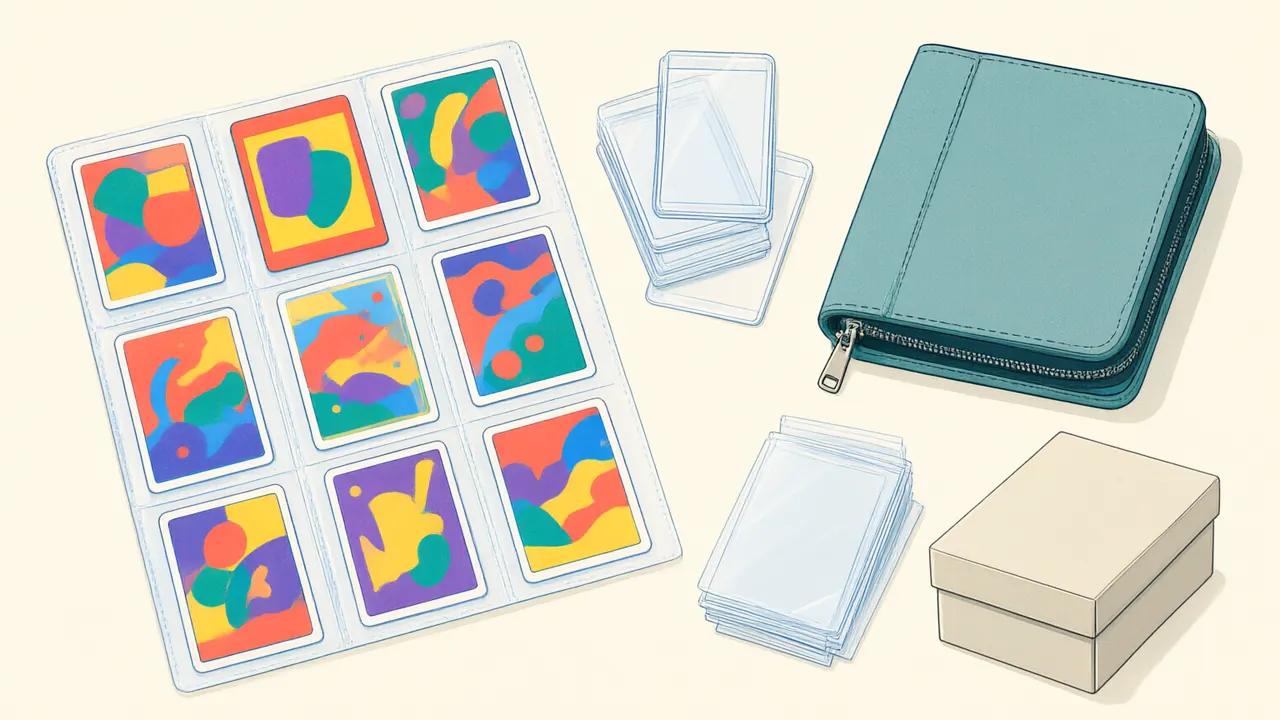
A top loader is a rigid plastic holder that keeps a sleeved card flat and stops it from bending. The standard 3 by 4 inch size fits a Pokémon card in a penny sleeve.
Put your favorite pulls in one as soon as they come out of the pack. It's the easiest habit in the hobby, and it saves a lot of heartbreak.
Pick the right binder
Binders are great for showing off a set. Nine-pocket pages hold nine cards per side, which makes it easy to lay a set out in order.
Look for side-loading pockets, which make it harder for cards to slide out. Zippered binders add extra protection from dust and knocks.
Many collectors avoid ring binders, because the rings can press into the cards sitting closest to them.
Handle cards with clean, dry hands
Oils and moisture from your fingers can mark a card's surface, especially on foil cards. Wash and dry your hands before a big sorting session, and hold cards by the edges.
Sort as you go
After you open packs, sort the cards right away instead of letting piles build up. Sorting by set, then by collector number, makes it easy to see what you're still missing.
Anything special goes into a sleeve and top loader on the spot. Everything else goes into bulk storage.
Watch heat, light and humidity
Direct sunlight can fade cards over time, and humidity can make them curl.
Keep cards and sealed product somewhere cool, dry and out of direct sun. A closet shelf indoors usually beats an attic or a garage, and silica gel packs in a storage box can help in damp climates.
Look after sealed product
If you're keeping product sealed, give it a stable shelf away from anything that could crush the corners.
Handle it by the box, not the wrap, so you don't tear or scuff the plastic.
Skip the rubber bands
Rubber bands and paper clips leave dents and marks. For bulk cards, a simple card storage box with dividers does the job much better.
What to use for what
| Cards | Protection |
|---|---|
| Your best pulls | Penny sleeve, then a top loader |
| Daily handling | Penny sleeve or deck sleeve |
| Set building | Side-loading binder, zippered if possible |
| Bulk commons | Card storage box with dividers |
| Sealed product | Cool, dry shelf, handled by the box |
Get the basics right and your collection will still look great years from now. For more like this, see Rip It or Keep It Sealed? and our guide to rarity symbols.